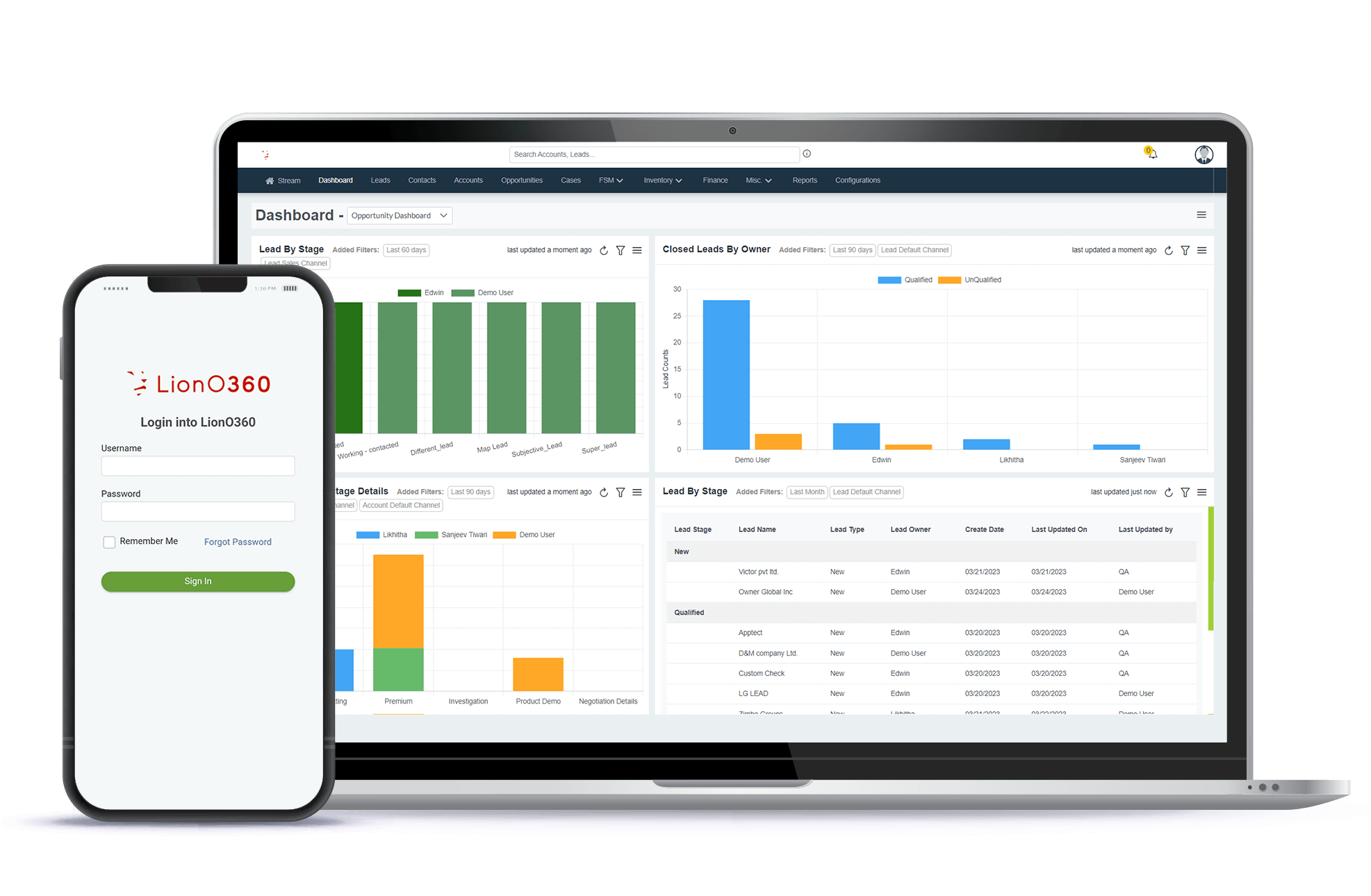

Managing a field workforce the right way helps businesses get more done, cut down on delays, and take better care of their customers. Modern field service software lets companies track daily tasks, find the best driving routes, handle paperwork automatically, and check on performance all in one place.
Tools like LionO360 FSM by LionOBytes give businesses a live look at what is happening out in the field. This keeps teams accountable and makes daily management much easier. As field work gets more complicated, using the right software helps businesses stay organized and keep their service high-quality every single day.
Key Takeaways:
- Better workforce management improves productivity and service quality.
- Real-time visibility helps managers make faster decisions.
- Smart Route Planning: Planning the best routes cuts down on travel time and maximizes your resources.
- Automated Workflows: Automation reduces manual paperwork and saves valuable administrative time.
- Clear Reports and Analytics: Data insights support better, more accurate business decisions.
- LionO360 FSM helps businesses manage all field operations from one central platform.
Introduction
It is tough to manage a team you cannot see. When employees work at different job sites and customer requests change constantly, managers find it hard to track daily tasks. As your business grows, keeping track of everything only gets harder.
Many organizations still rely on phone calls, spreadsheets, and manual updates to manage their workforce. While these tools can work for smaller teams, they often backfire as the business expands - leading to delays, communication gaps, and major operational inefficiencies.
It is tough to track performance, monitor job progress, and respond quickly to customer needs when managers cannot see what is happening in the field. These daily challenges quickly drag down employee productivity as well as customer satisfaction.
Because of this, businesses are increasingly adopting modern field service software. Once organizations put the right tools in place, they can quickly improve visibility, streamline operations, and support a much more productive field workforce.
What Is Field Workforce Management?
Field workforce management is the process of planning, coordinating, and monitoring employees who work outside the office. These employees may include service technicians, maintenance teams, inspectors, sales representatives, and other field-based professionals.
The main goal is simple. You want to ensure that employees have the information, resources, and schedules needed to complete their work efficiently while maintaining high service standards. When managed effectively, a field workforce becomes more productive, organized, and responsive to customer needs.
Why Efficient Workforce Management Matters?
Field operations directly influence customer experiences. Delayed visits, poor communication, and missed updates can quickly affect customer satisfaction and business performance. Efficient workforce management helps businesses improve operational control.
At the same time, it ensures that field employees can perform their jobs more effectively.
| Common Challenge | Business Impact |
|---|---|
| Limited visibility into field activities | Difficulty tracking progress and performance |
| Delayed service visits | Lower customer satisfaction |
| Excess travel time | Reduced productivity |
| Manual processes | Increased administrative workload |
| Lack of performance data | Slower decision-making |
When businesses actively address these challenges, they almost always experience smoother operations and improved service delivery.
Improve Visibility into Daily Field Activities
One of the biggest obstacles in field workforce management is limited visibility. Managers often spend valuable time calling employees for updates or checking the status of ongoing tasks. This process can slow decision-making and create communication gaps.
Having access to real-time workforce information allows managers to understand what is happening in the field at any moment. LionO360 FSM provides visibility into field activities, helping businesses monitor workforce performance, track task progress, and maintain better operational control.
Handle Scheduling and Tasks Without the Chaos
Your field teams always perform best when they have clearly assigned and organized responsibilities. Relying on manual scheduling is a gamble; it frequently confuses, overlapping assignments, and missed appointments. When these issues pop up, they immediately drag down your team's productivity and impact the customer experience.
The fix is a structured scheduling process. It guarantees the right employee gets assigned to the right task at the exact right time. This simple change builds a much more organized workflow and lifts overall efficiency.
Cutting Down Travel Time with Smarter Routes
Travel time stands out as one of the largest productivity challenges for field teams. When your employees spend too much time traveling between locations, they simply have less time available to complete customer visits and service requests.
Focusing on effective route management helps businesses optimize travel plans and completely reduce unnecessary movement. Better route planning allows field employees to complete more work while quickly improving response times for customers. This exact benefit is why route optimization remains one of the most valuable features within modern software for field service.
Check-In and Check-Out Tracking Keeps Everyone on Track
Accountability plays an important role in successful field operations. Managers need accurate information about employee attendance, arrival times, and task completion status. Without proper tracking, verifying field activities, and maintaining operational consistency becomes a massive headache.
Using check-in and check-out tracking easily creates transparency across the workforce. It gives managers reliable records that support better monitoring and reporting without the guesswork.
Saving Hours by Automating Routine Admin Work
Many field service businesses still spend significant time on routine administrative activities. Updating job status, assigning tasks, collecting information, and preparing reports can consume valuable hours each day.
Workflow automation fixes this by reducing manual effort and streamlining repetitive processes. Employees can spend less time on administrative work and more time focusing on customer service and field operations. By automating routine tasks, businesses easily improve efficiency while reducing the risk of human error.
Keeping Field Operations Connected with Better Communication
Strong communication is essential for managing a successful field workforce. When managers and field employees lack access to timely information, delays and misunderstandings become far more common.
A field service management platform addresses this by keeping your entire team connected and informed throughout the workday. When communication works this well, everything else falls into place, leading directly to faster responses, smoother coordination, and a much better customer experience.
Using Reports and Analytics to Drive Better Decisions
You cannot have successful workforce management without accurate information. When you lack performance data, your business is forced to rely on assumptions when making operational decisions, and that makes it tough to identify areas that need improvement.
Reports and analytics change all of that by giving you clear insights into workforce productivity, completed tasks, operational trends, and performance patterns. Keeping a close eye on these numbers helps businesses make informed decisions that support continuous improvement.
Manual Workforce Management vs Modern Field Service Software
| Manual Workforce Management | Modern Field Service Software |
|---|---|
| Limited operational visibility | Real-time workforce visibility |
| Manual task assignment | Centralized scheduling |
| Time-consuming processes | Workflow automation |
| Difficult performance monitoring | Reporting and analytics |
| Inefficient route planning | Route optimization |
| Delayed communication | Faster information sharing |
When businesses expand and manage larger field teams, the difference between these two methods becomes even more noticeable.
Boosting Business Efficiency with LionO360 FSM
LionO360 FSM by LionOBytes is designed to help businesses easily simplify field operations and improve workforce management. To do this, the platform supports field teams with capabilities like route management, workflow automation, questionnaire management, check-in/check-out tracking, reporting, and real-time operational visibility.
Managing multiple disconnected processes is a headache. Instead, you can oversee all field activities through a centralized platform that builds better coordination, accountability, and productivity. Giving your organization this level of control over field operations is exactly how LionO360 FSM drives improved efficiency and stronger customer service outcomes.
Common Workforce Management Mistakes to Avoid
Many organizations face serious operational challenges simply because they continue using outdated workforce management practices.
Some of the most common mistakes include:
- Managing your whole workforce through spreadsheets alone.
- Handing out tasks without a clear scheduling process in place.
- Losing sight of employee activities because tracking isn't consistent.
- Missing out on the travel savings that come with optimized routes.
- Sticking to slow, manual ways of handling company reports.
- Guessing on major business decisions instead of using performance data.
Tackling these bottlenecks is the fastest way to sharpen workforce efficiency and unlock much better operational performance.
The Bottom Lines
Managing a field workforce means much more than just handing out tasks. To truly succeed, you need to build a structured system, one that naturally helps employees work efficiently, stay accountable, and deliver a far better level of service.
Focusing on better visibility, optimized routes, automated workflows, and performance insights places businesses in a much stronger position to scale up productivity and operational efficiency. You can easily clear out complex field operations and grab tighter control over your workforce by putting the right field service software to work. LionO360 FSM by LionOBytes hands businesses the specific tools required to streamline field management, secure accountability, and drive long-term growth.
Frequently Asked Questions
1. What is field workforce management?
Field workforce management is simply how you plan, track, coordinate, and optimize employees who work outside the office. The main goal here is to steadily improve productivity and service delivery.
2. Why is field service software important for businesses?
Field service software helps businesses manage scheduling, workforce tracking, route planning, reporting, communication, and operational visibility, all from a single, centralized platform.
3. How can businesses improve field workforce productivity?
Businesses can easily spark better productivity by increasing visibility, optimizing travel routes, automating everyday workflows, monitoring performance, and keeping communication clear across all field teams.